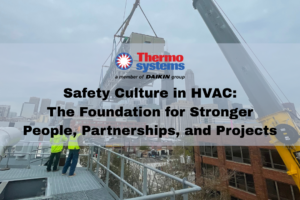
From initial project planning to long-term maintenance, a safety-first approach can transform how teams collaborate, how work is executed, and how well your building is protected. Creating a safe environment is a shared responsibility that involves everyone who helps bring a project to life.
A steadfast safety culture supports informed decision making and instills confidence in a building’s performance. Below, learn more about how safety shapes many aspects of mechanical projects.
With insights from our Field Operations and HR & EHS teams, you’ll learn how safety strengthens trusted partnerships and contributes to better buildings.
The Positive Impact of Safety on Early Project Planning
Taking the time to fully understand job site elements, such as spatial constraints, regulatory standards, and installation requirements early on, can help prevent unsafe working conditions. These environmental details give project teams the opportunity to anticipate needs and ensure that all on-site personnel can complete work efficiently and safely.
When asked about job site environments, our Field Operations Manager notes that “it allows teams to approach a project with confidence from day one and reinforces a commitment to building standards that protect people at every step.”
This part of the project process encourages input from every team member involved, both in the office and in the field. Early collaboration helps align teams on electrical considerations, access requirements, site conditions, and other critical project details that keep projects on schedule.
How Safety Considerations Support Building Operations
“Safety-focused installation practices create a strong foundation for long-term performance and serviceability,” our Field Operations Manager noted.
Electrical decisions were identified by our Field Operations Manager as particularly important safety considerations during installation. This often involves verifying grounding, reviewing equipment placement, and securing electrical connections. Confirming these key elements has a lasting impact on how safely the system operates over time.
It helps prevent:
- Damage
- Downtime
- Unsafe Conditions
Careful installation also benefits the teams responsible for servicing building systems long after installation is complete. These precautions encourage proactive communication between facilities personnel and service technicians as they work together to confirm proper set up. When teams share these safety expectations, they establish a foundation of trust that supports safer working conditions and effective future maintenance visits.
Training and Safety Conversations Build a Strong Culture
“Regular safety conversations increase awareness and help build habits that support safe decision-making every day,” our HR & EHS Manager explained.
In the HVAC industry, project teams work with a wide variety of equipment, environments, and job site conditions. Open discussions and frequent safety trainings help reinforce best practices, encourage mindfulness, and make safe work habits easier to incorporate. With increased exposure to these topics, safety can become a natural part of daily operations.
Safety is all about wanting people to go home safely, just as they came.
“With every new training session, I feel that our team becomes even more invested in understanding safety at a deeper level,” our HR & EHS Manager noted. That level of engagement demonstrates our commitment to looking out for one another, fostering a people-first culture.
Helpful Tips for Promoting Safety in the Workplace
Safety can be reinforced both on and off the jobsite. Below are a few ways you can help your team:
- Slow down to Assess Project Needs: Take the time to thoroughly evaluate projects and complete tasks fully. Attention to detail enables stronger safety and project outcomes.
- Communicate Concerns Early: Open communication helps teams identify safety gaps early and work together to find solutions that keep everyone safe.
- Stay Flexible and Look Out for Others: Collaboration between field and office teams can help projects adapt to changing conditions while maintaining safety as a priority. Looking out for one another also fosters trust.
- Treat Safety as Everyone’s Responsibility: When everyone actively participates in safety training, discussions, and best practices, safe habits integrate into everyday work.
- Keep Safety Communication Simple and Frequent: Prioritize both clarity and consistency in safety conversations. This will help reinforce expectations and standards.
Safety at Thermosystems
“Our approach to safety is rooted in genuine care for our people,” our HR & EHS Manager shared. Beyond compliance and project requirements, safety is most impactful when it’s embraced as a foundational part of how teams work every day. This commitment is at the heart of the Thermosystems Way.
By maintaining an open and supportive environment, our teams are encouraged to continuously learn, knowledge share, and deepen safety habits together. Over time, that has helped our staff stay engaged and proactively apply more safety measures. For our company, safety is a non-negotiable part of what we do. It supports better work, safer outcomes, and stronger teamwork.
Because better buildings start with better partners.